
English| EUR
Suggested for you
More currencies
Choose a language
Jigokudani sits at roughly 850 metres in the Yokoyu River valley, where the forecast for Nagano city rarely matches the forecast on the trail. This nagano snow monkey park weather guide sets out what each season actually delivers underfoot and overhead. It also explains why the park stays open in conditions that close other mountain attractions.
Quick answer
Jigokudani is cold and snowy from December to March, with snow lying on the trail for months, and warm, humid and rainy from June to September. The park opens 08:30–17:00 daily year-round and weather almost never closes it. Monkeys bathe most readily in cold conditions, so the 09:00–16:00 window matters more than the forecast itself.
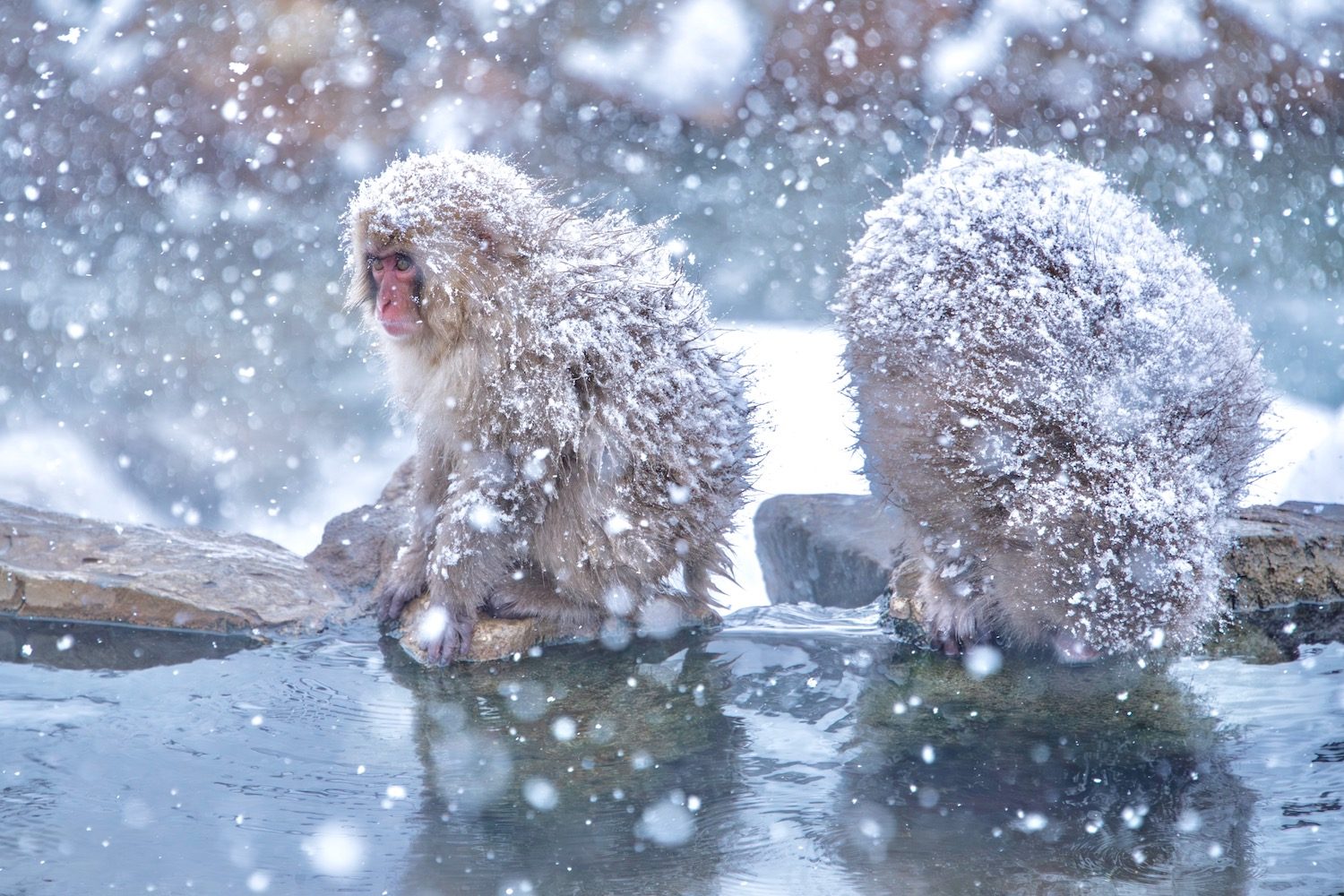
The macaques of Jigokudani did not learn to bathe in hot water by instinct. Keepers recorded the behaviour spreading through the troop from the late 1960s, after one young female followed an inn's outdoor bath, and it is now passed down socially rather than genetically. That single detail explains most of what visitors need to know about nagano snow monkey park weather: the hot spring is a response to cold, and cold is seasonal. The valley sits in the Joshinetsu Kogen highlands, on the snow-heavy Sea of Japan side of Honshu. Winter storms arriving off the water dump metres of snow on Shiga Kogen above and a deep, packed layer on the Yokoyu River gorge below. From late December through early March the approach trail from Kanbayashi is a compressed corridor of ice and snow between cedar trunks, and daytime temperatures often sit below freezing. This is when the onsen scene most visitors picture actually happens, and it is the reason the wider Jigokudani Monkey Park winter season carries the heaviest footfall. Spring and autumn are the honest shoulder seasons. April brings meltwater and mud, May brings green and infant macaques, and October turns the gorge red and gold before the first snow returns in November. Summer is the surprise: the valley is humid, cicadas are loud, and the troop spends its time in the forest canopy and the river shallows rather than the bath. The steam vents that gave Jigokudani its name — hell's valley — still hiss year-round, but the monkeys have no reason to soak in August. Rain is common through the June baiu season and again in early September typhoon season, and the trail is exposed to it for most of its length. What visitors do with that knowledge depends on what they came for. Anyone chasing the bathing photograph should read the nagano snow monkey park weather forecast for cold rather than for clear skies; overcast, sub-zero mornings tend to be more productive than bright, mild ones. Anyone travelling in summer should reset expectations toward wild-troop behaviour, feeding sessions and the walk itself. The park's own staff post daily conditions and monkey counts, and a check the night before is worth more than any long-range app. Conditions in the gorge shift fast; the troop, notably, does not leave.
“The hot spring is a response to cold, and cold is seasonal.”
The optimal time to visit is during the cooler months of January and February when snow accumulation is highest and the monkeys are most motivated to use the hot spring. For daily activity, the best arrival window is 09:00–16:00, as monkeys are most active and likely to be near the hot spring during these cooler daylight hours.
Cold, -5°C to 2°C
Deep snow creates the iconic scene where monkeys bathe in the hot spring. This period offers the highest probability of snow-covered surroundings.
Mild, 5°C to 18°C
The park is often peaceful during these months. Visitors can observe the birth season for new infants.
Cool, 6°C to 17°C
Clearer days and vibrant autumn foliage provide a scenic backdrop. Temperatures are comfortable for the walk to the park.
—
Arriving early on weekdays minimizes visitor density. Cooler morning air encourages monkeys to gather near the hot spring for warmth.
Verdict: The best opportunity for reliable snow-bathing activity is visiting on a weekday between January and February, arriving at the park within the 09:00–16:00 window.
The Jigokudani Monkey Park maintains consistent operating hours throughout the week. Visitors should monitor local weather conditions, as heavy snowfall or severe weather may occasionally impact access to the park.
The Jigokudani Monkey Park is located in Yamanouchi, accessible primarily via Nagano Station. Reaching the park requires a combination of rail and bus travel followed by a walk through the forest.
Nagano Electric Railway (Nagaden) to Yudanaka Station
Nagaden Bus from Yudanaka Station to Kanbayashi Onsen
From Kanbayashi Onsen bus stop to park entrance
The final 1.6-kilometer path from the trailhead to the park is unpaved and susceptible to snow and ice; visitors should arrive prepared for winter conditions, as the walk is the only way to reach the monkeys.
The walk to the hot spring is a snow-packed forest trail, so what you carry matters more than what you plan.
The Jigokudani Monkey Park charges a standard conservation fee to support the maintenance of the park and the protection of the wild Japanese macaques. This fee is required for all adult visitors entering the facility.
Verdict: A typical adult visitor pays 800 JPY, with the total cost varying only based on the age of the visitor.
Everything you need to know about nagano snow monkey park weather
While the macaques are famous for bathing during the winter, observing nagano snow monkey park weather is useful for planning your trek. The monkeys frequent the hot spring when temperatures are cooler, regardless of whether it is snowing or raining.
Summer in the park is lush and green, offering a different perspective than the winter snow. While the monkeys may not bathe as frequently in the warm thermal water during summer, they are still active in the area.
When considering nagano snow monkey park weather, you should wear sturdy, comfortable walking shoes for the forest trail. It is wise to bring layers and rain gear, as conditions in the Yamanouchi valley can change quickly.
The park maintains consistent operation regardless of the daily nagano snow monkey park weather. You can visit between 08:30 and 17:00 every day of the week.
The best arrival window is 09:00 to 16:00 to see the macaques when they are most active near the onsen. Visiting during these cooler daylight hours increases your chances of seeing the monkeys near the water.
The park is generally accessible throughout the year, but you should check local conditions if severe weather is predicted. Proper footwear is essential for the path, especially if recent precipitation has made the forest trail slippery.
The area is located in a mountainous region where temperatures fluctuate significantly between seasons. Checking local climate forecasts helps you dress appropriately for the hike to the Jigokudani Yaen-koen.
The park typically remains open even during inclement weather, though the forest trail may become muddy. Always prioritize safety and wear appropriate traction gear if visiting during icy or wet conditions.
Private Snow Monkey Tours
Read more Tickets & toursNagano Snow Monkey Day Trips
Read more GuideHow to Get to Jigokudani Monkey Park
Read more Tickets & toursNagano Snow Monkey Tours from Tokyo
Read more Tickets & toursNagano Snow Monkey Tours from Hakuba
Read more Tickets & toursNagano Snow Monkey Passes & Tickets
Read more