
12 hr
Nagano Snow Monkeys, Zenkoji Temple & Sake Experience
Discover ancient temples, taste traditional sake, and witness wild monkeys soaking in natural hot springs
Reserve
Hand-picked by our editors — only the best 5 tours from 60 reviewed.
Verified partners for every tour, free cancellation where available, and instant confirmation on every booking.
12 hr
Discover ancient temples, taste traditional sake, and witness wild monkeys soaking in natural hot springs
Reserve
10 hr
Witness wild macaques bathing in hot springs on this exclusive full-day adventure through Nagano's winter landscapes
Reserve
10 hr
Witness wild macaques bathing in hot springs and explore historic temples on this customizable private excursion
ReservePrices from verified partners. Availability updates in real time at checkout. Free cancellation policies apply where shown.
The landmarks, rooms, and views travelers on this tour remember — all visible on a single visit.
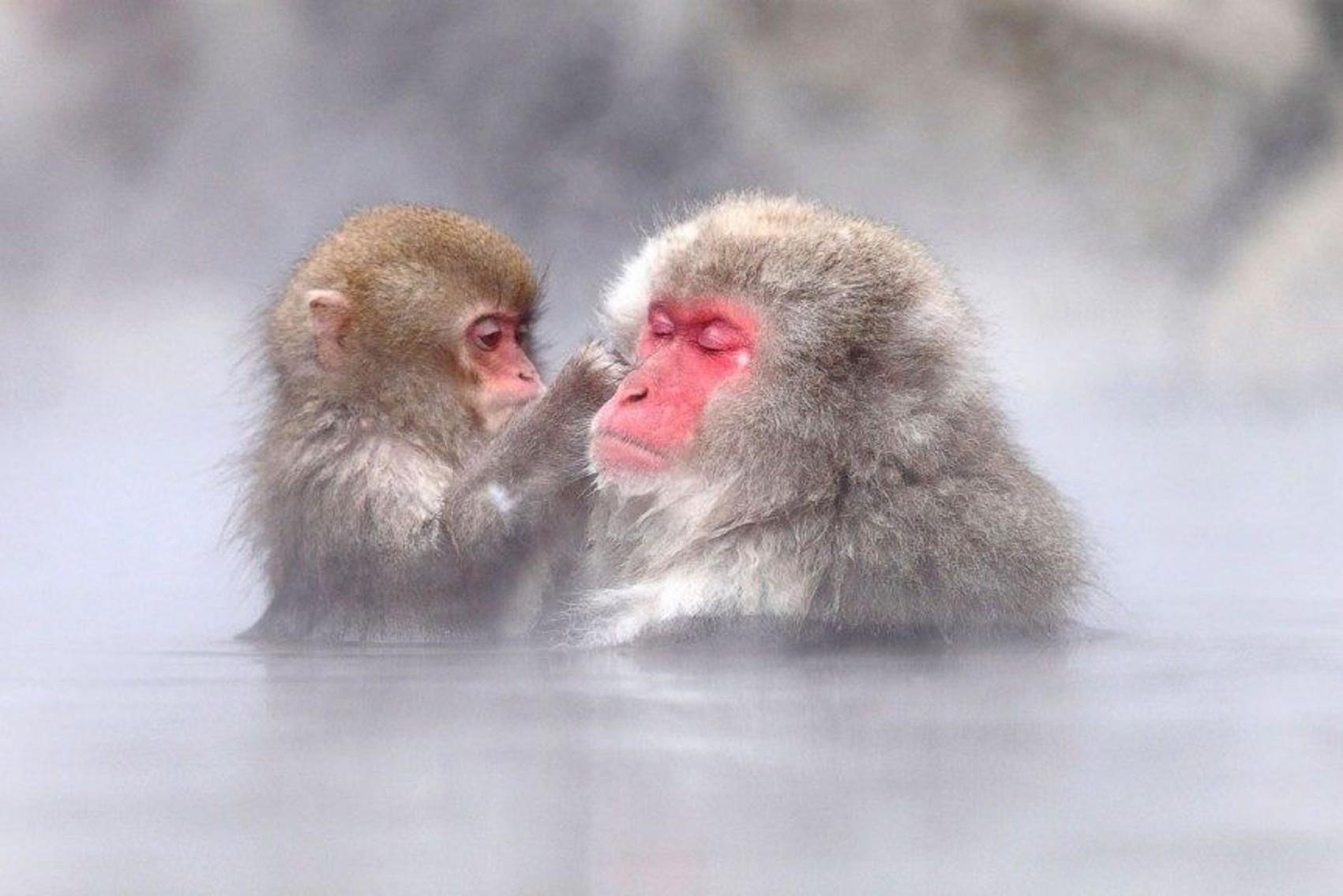
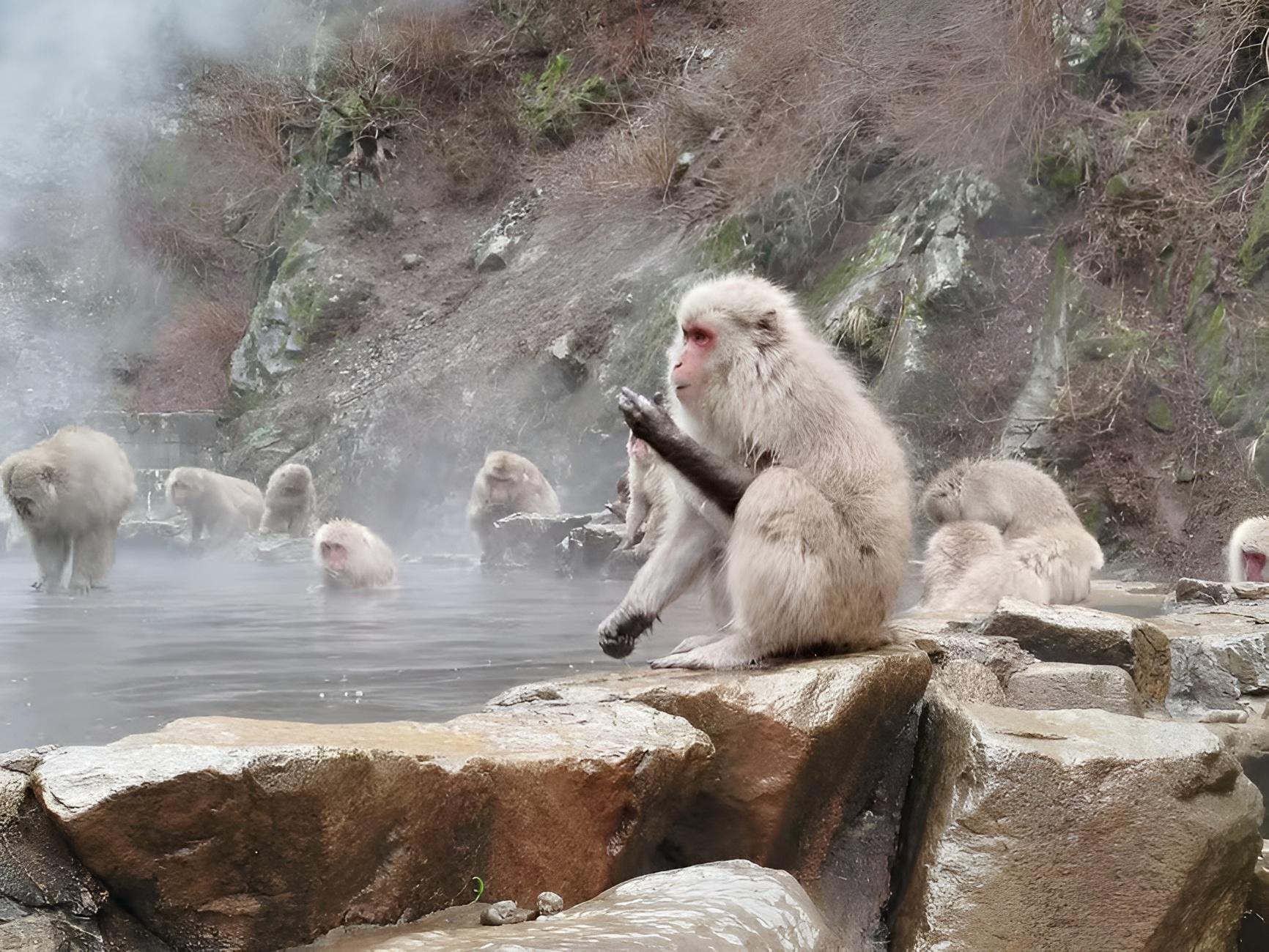
The primary bathing area where monkeys congregate, especially in winter. This man-made pool is where the most iconic photos are taken.
Information Center
Jigokudani Steam Vent
Forest Walking Trail
Monkey Observation Area
They complement each other; most visitors who do both call the primate observation the more physically engaging pursuit while the village walk offers superior relaxation. A nagano snow monkey tour from hakuba tour allows travelers to witness Japanese macaques in their habitat, while the rival experience provides a soak in historic geothermal waters.
| Feature | Top pick Jigokudani Monkey Park | Shibu Onsen |
|---|---|---|
Physical Activity |
30-40 minute forest walk | Low intensity town stroll |
Cultural Depth |
Low — nature observation focused | High — traditional architecture and baths |
Wildlife Interaction |
High — wild Japanese macaques | None |
Duration |
1.5–3 hours | 2–4 hours |
Best For |
Animal enthusiasts and photographers | Wellness seekers and history lovers |
| See tickets → |
Verdict: Choose a nagano snow monkey tour from hakuba for active exploration of local fauna, or select the onsen-hopping experience if you prefer a nagano snow monkey tour from hakuba tours package that prioritizes cultural immersion and rest.
Choose your ticket, select your date, and reserve in under two minutes. Secure checkout handled by our verified partner.
Instant confirmation by email, with a mobile voucher you can save offline. No printing, no queuing at a collection desk.
Arrive at the entrance, show your voucher on your phone, and walk in. Most tickets include priority or skip-the-line access.
Practical details for your visit straight from our verified partners — hours, access, rules, and how to get there.
Kanbayashi, Yamanouchi-machi
Primary access point for the forest trail.
Take the Nagaden Bus from Nagano Station to the Snow Monkey Park bus stop. Follow signs for a 30-40 minute walk to the entrance.
Park at the Kanbayashi Onsen parking lot. A 30-40 minute walk is required from the lot to the park.
Wear sturdy, comfortable walking shoes appropriate for a forest trail. In summer, the path can be muddy, while winter requires snow boots and ice traction devices.
Luggage storage is not available at the park entrance; use lockers at Yudanaka Station or near the bus stop. The trail to the Jigokudani Monkey Park is unpaved and natural.
Photography is permitted, but avoid using selfie sticks or unorthodox methods that may disturb the wild Japanese macaques. Please respect the animals by maintaining a safe distance.
The path to the park is an unpaved forest trail that is not accessible for wheelchairs or strollers. Visitors must be prepared for a 30-40 minute hike.
Mobile phone use is permitted, but please be mindful not to use them in a way that interferes with the wild animals. Ensure your device is charged for photos.
Children are welcome, but parents should ensure they do not run or shout near the monkeys. The 1.6km forest walk is manageable for active children but may be difficult for toddlers.
Eating and drinking near the monkeys is prohibited to protect the wildlife. There is a small gift shop and information area near the park, but limited dining options are available on the trail.
Pets are not allowed inside the park as this is a wild animal habitat. Please make alternate arrangements for your pets before arriving at the trail.
The 800 JPY conservation fee supports the maintenance of the habitat. Always check the official website or social media for the daily monkey attendance forecast.
Kanbayashi, Yamanouchi-machi
Primary access point for the forest trail.
Get directionsBest time to go, insider tips, nearby landmarks, and the cancellation fine print — flip through to skim what matters to you.
How crowds, weather, and events shift across the year.
January–March offers the iconic sight of macaques in snowy hot springs. Temperatures are cold, requiring heavy winter gear.
April–May is the birthing season where newborns can be observed. The weather begins to warm up.
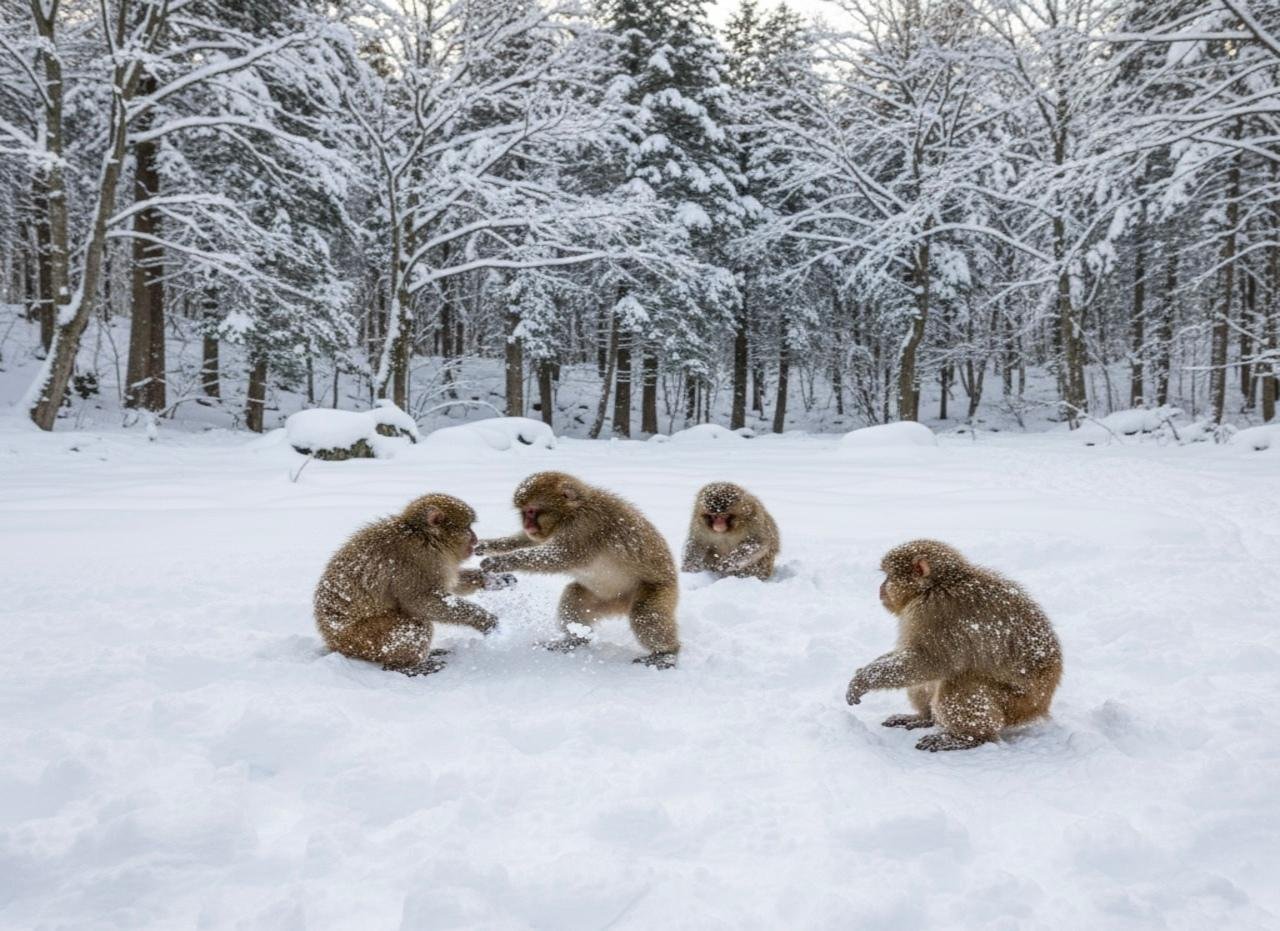
June–August is ideal for seeing young monkeys play. The forest trail is lush and green but can be muddy.
September–November features the mating season. Weather is cool and comfortable for hiking.
Small details that turn a good visit into a great one.
Always check the park's official social media or website for the daily monkey appearance forecast before heading out from Hakuba.
The mountain weather is unpredictable, so dress in layers to stay comfortable during the hike and observation time.
The 1.6km trail is unpaved; wear shoes with good grip, especially in winter when ice makes the path slippery.
Do not attempt to touch or feed the macaques; they are wild animals that should be observed from a distance.
Non-bookable sights within a short walk — free to visit, easy to pair.
A nationally registered natural object exhibiting volcanic steam.
A historic temple located near the forest trail path.
A traditional hot spring town with nine public baths.
A historic inn located across the river from the park.
Flexible, no hidden fees.
Tickets are purchased on-site at the park entrance on the day of your visit. The 800 JPY conservation fee is non-refundable.
Hand-picked options within walking distance — pick a district for vibe, or a specific hotel for convenience.
Town known for traditional Japanese ryokans and hot springs.
Classic onsen town atmosphere with stone-paved streets.
Major ski destination offering various accommodation tiers.
The macaques of Jigokudani did not always bathe. The habit was recorded in the early 1960s, after a young female followed a stray apple into an inn's outdoor bath at Kanbayashi and climbed out warm. Others copied her. Within a decade the behaviour had passed down the troop as culture rather than instinct, and Jigokudani Yaen-koen opened at 6845 Hirao, Yamanouchi-machi, Shimotakai-gun, Nagano 381-0401, Japan to give the animals a purpose-built pool of their own. The name means "hell valley," borrowed from the sulphurous steam that vents through the Yokoyu River gorge at roughly 850 metres of elevation. Edo-period travellers used the same word for the boiling ground; the onsen villages of Shibu and Kanbayashi grew around those vents centuries before any monkey took an interest. What a nagano snow monkey tour from hakuba reaches today is therefore two histories layered on one another — a geothermal spa culture, and a primate population that borrowed it. Japanese macaques are the northernmost non-human primates on earth, wintering in snowpack that regularly exceeds a metre. Roughly 160 individuals move through the park in a loose troop, unfenced and unrestrained, descending from the forest on their own schedule. Researchers have studied them continuously for six decades, making Jigokudani one of the longest-running open-air primate observation sites anywhere. The steam, the hierarchy visible around the pool, the pink faces against grey rock — these are the images that carried the valley into National Geographic and then into every guide to Nagano landmarks. The park sits inside Joshinetsu-kogen National Park, connected to the road only by a 30-40 minute forest walk from the Kanbayashi trailhead — a deliberate buffer that has kept vehicles, vendors and crowds at a distance. A conservation fee of 800 JPY per adult funds feeding, veterinary care and trail maintenance, and the gates keep the same hours every day of the week, 08:30–17:00. Yamanouchi's position matters as much as its wildlife: the valley lies on the far side of the mountains from Hakuba, which is why the guided nagano snow monkey tour from hakuba grew into a fixed part of the region's winter itinerary rather than a casual detour. Zenko-ji temple in Nagano city, founded in the seventh century, anchors the other end of that route.
"Within a decade the habit had passed down the troop as culture rather than instinct."
A step-by-step walkthrough of the visit — what you'll see, how long each stage takes, and the details that matter.
You leave Hakuba while the Happo-one lifts are still loading, and the coach turns east through the Olympic-era tunnels toward Nagano city. On a private Hakuba snow monkey and alpine discovery run, your guide picks you up at the hotel door; the Zenkoji Temple and sake variant swaps in a stop at the seventh-century hondo and a cellar tasting on the way back. The road ends at Kanbayashi. From there you walk — 30 to 40 minutes along a cedar-lined forest path cut into the hillside, flat enough for most, slick in places where meltwater freezes. Steam finds you before the monkeys do. You pay the 800 JPY conservation fee at the gate, then follow the boardwalk down to the pool. Nothing is caged. Juveniles cross the path in front of your boots, a matriarch shoulders into the water, and someone's telephoto lens fogs instantly. You crouch at pool level, stay quiet, keep your hands empty and your food inside your bag. Twenty minutes in, you stop photographing and simply watch the grooming order rearrange itself. Then back up the trail, boots heavy, to a waiting driver. A nagano snow monkey tour from hakuba returns you over the ridge by late afternoon, jacket still smelling faintly of sulphur.
The Jigokudani Monkey Park is open daily from 08:30–17:00. Please plan your nagano snow monkey tour from hakuba within these hours.
Currently, you can purchase tickets on-site for 800 JPY, though online ticketing is being introduced. We recommend checking the official site before your nagano snow monkey tour from hakuba.
The walk to the park takes 30-40 minutes along an unpaved forest trail. Prepare accordingly for your nagano snow monkey tour from hakuba.
No, the forest trail is not paved and not suitable for strollers. Please keep this in mind when booking your nagano snow monkey tour from hakuba.
Prohibited items include selfie sticks and drones. Follow all rules to ensure a safe nagano snow monkey tour from hakuba.
Winter (December to March) is the best time to see monkeys in the hot springs during your nagano snow monkey tour from hakuba.
No, feeding or touching the monkeys is strictly prohibited at Jigokudani Monkey Park. Respect the animals during your nagano snow monkey tour from hakuba.
Yes, many operators provide transport from Hakuba to Jigokudani Monkey Park for a convenient nagano snow monkey tour from hakuba.
Yes, you can combine your visit with stops in the nearby traditional hot spring towns of Shibu Onsen or Yudanaka after your nagano snow monkey tour from hakuba.